





At a Glance
- The “write and wait” era is over. Google rewards authority and topic ownership across multiple channels, not keyword volume. You need visibility on search, social, video, and your email list, not just organic rankings.
- Your blog is the anchor, not the whole business. Discovery happens everywhere now. If you're not marketing on social, YouTube, or email, you'll struggle to gain traction no matter how good your content is.
- Pick a monetization model that fits your goals. There's no universal path. Success depends on matching your approach to your resources, skills, and timeline.
People love to say blogging is dead. It isn't. The old playbook is.
I started my first blog in 2009, and I've seen every major shift since: SEO updates, ad network changes, the rise of social, and now AI.
A lot comes and goes fast, but the fundamentals haven't changed. Useful content, trust, and consistent execution still win.
What has changed is how you approach it.
Ten years ago, you could publish a few keyword-optimized articles, rank, and collect affiliate or ad income. That worked when competition was thin and Google showed ten clean blue links.
It's a different game now.
Search is more competitive, AI is flooding the web with copycat content, and users expect more from a brand than just informational posts.
Blogging still works, but you have to treat it like a business, not a hobby.
This article breaks down what's working now, what's no longer effective, and where content-driven sites are heading as we move into 2026.
Why Blogging Still Works (But Very Differently Than Before)
Today, the real business model is building a brand around your content.
Your site anchors your online presence, but it can't be the whole thing.
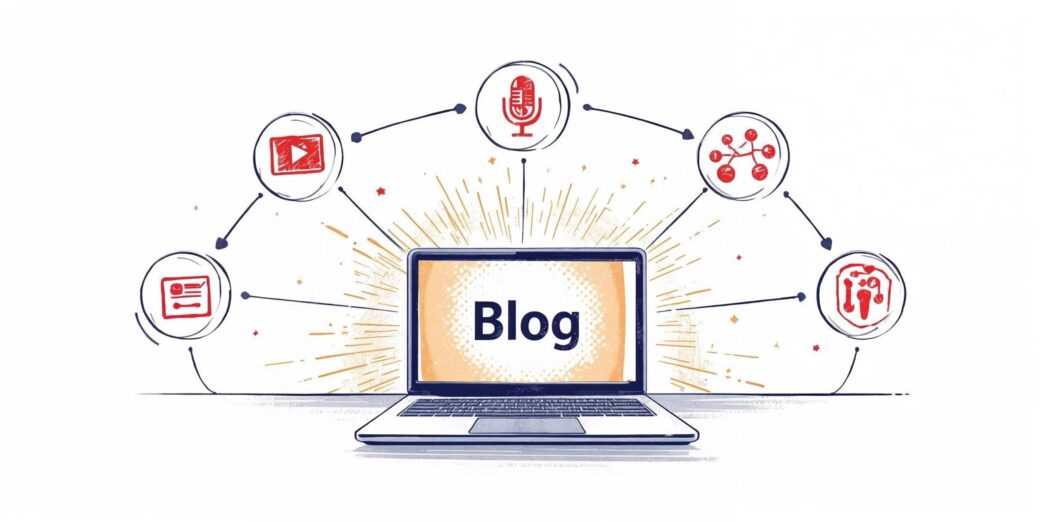
Discovery happens across multiple channels such as social media, YouTube, newsletters, and podcasts. Your blog connects them.
It's your owned platform where trust builds and monetization happens. If you skip it, you're renting your audience from platforms that can change overnight.
The Different Paths to Building a Blog Business
If you're thinking about starting a blog, here's what that can look like today.
What used to be “write posts and earn ad clicks or affiliate income” has evolved into several distinct models. The key is matching the model to your goals, time, and skills.
1. The Authority Creator
This is the modern version of the “influencer,” but with more depth and expertise. You build trust by sharing real experience, insights, and lessons. Your content positions you as a go-to resource in your niche.
Revenue typically comes from affiliates, sponsorships, or products tied directly to your expertise.
Best for: People who enjoy teaching, writing, or sharing what they've learned.
2. The Independent Media Operator
This is the model I've followed with The Ways To Wealth. It's a small-scale publishing business that relies on systems, not personal fame.
You focus on producing high-quality content across the web and monetizing through a mix of ad revenue, affiliate partnerships, and email.
It takes more time to build, but it can become a real business with consistent income.
Best for: People who want to build something sustainable, even if it takes longer.
3. The Brand Builder
In this model, a blog supports a broader business such as coaching, courses, digital products, or e-commerce. The blog drives traffic, builds credibility, and captures leads, while the main income comes from the business behind it.
This hybrid approach is how many small online brands grow today.
Best for: Entrepreneurs who already have a product, service, or skill to sell.
4. The Creative Explorer
Some people start a blog simply to learn, create, and see what happens. That curiosity is how a lot of great businesses begin.
Best for: Anyone curious about online business who wants to build skills and test ideas with low risk.
How to Make Money Blogging Today
The great thing about blogging to make money is just how many different ways there are to monetize a blog post. While you can make money from any of them, some are better-suited to certain types of blogs.
A good formula is to combine several different methods to see which are most successful for your blog subject and audience, and to identify multiple income streams rather than relying on just one.
#1. Advertising Networks
One of the primary ways bloggers earn money is by displaying ads. But can you imagine how much time and energy it would take to go out and find potential advertisers, and then convince them to buy ads on your site? Online advertising networks aim to solve that problem by connecting advertisers to websites and automating the process.
The two most common pricing models for online display ads are called CPC and CPM.
CPC (cost per click) means that you earn money each time an ad on your blog is clicked. How much you earn per click ranges widely, from a few cents to a dollar or two depending on a variety of factors.
Earlier, I mentioned that certain niches tend to have relatively low advertising rates, and this should be one consideration when deciding what to blog about.
Most of the time, CPC rates are based on the demand for a particular keyword. So, if you operate in a niche that talks about high-demand keywords, you'll make more money (all other factors being equal).
CPM (cost per mille) means that you're paid based on every 1,000 impressions (views) an ad on your site has. In this model, it doesn't matter if your visitors never actually click the ad — you'll still get paid.
However, CPM rates tend to be significantly lower than CPC rates (around $2 per thousand impressions), meaning that you need a significant amount of traffic to make real money this way.
There are several ad networks out there, but Google AdSense is the largest and most popular. In order to receive a payout, your blog must reach at least $100 a month in earnings.
AdSense doesn't have a minimum traffic requirement, so in theory it's a good place for new bloggers to start. However, you have to apply to the program, and the overwhelming majority of applicants are rejected.
Google has strict requirements when it comes to content quality, and one common mistake new bloggers make is applying for AdSense too early. If you're rejected once, there's some anecdotal evidence that it's more difficult to get approved later.
So, if you're thinking about applying, wait until you have a good body of quality content that you've produced over the course of a few months.
Mediavine is another ad network and one I've worked with in the past (I'm now with Raptive, but would still recommend Mediavine). To join Mediavine, you need at least 30,000 page views per month. In fact, you'll find that most ad networks have a minimum traffic requirement.
Summary: Bloggers can monetize their site by agreeing to show digital ads.
How to get started: All networks have a different process. For some, you can simply create an account to get started. Some require you to apply and be accepted. And most have publisher requirements, such as no encouraging clicks, no illegal content and no copyright violations.
How much you can make: It varies widely according to your traffic and impressions. This site earns around two cents per visitor. However, that's on the higher side, as personal finance blogs have some of the higher CPMs. A blog on cooking may make somewhere around one cent per page view.
Pros: Ad networks do the legwork for you. Bloggers no longer have to hustle to find advertisers themselves.
Cons: While some ads can be customized to some degree, they may not always blend well with your site and can make a page look cluttered or unappealing. They also require tracking code to run in the background, which can sometimes slow your site down.
#2. Affiliate Marketing
Affiliate marketing means that you earn money when you send a customer to a business and that customer subsequently “converts” by signing up for something, clicking something, buying something or doing anything else the business you're an affiliate for defines as a “conversion.”
Affiliate products can be a great source of revenue for a blog, so you want to choose a topic that allows you to write about things people interested in that topic will need, like and buy.
Take this blog for an example: I can write about anything from books on investing to passive income business ideas. When someone buys a book or signs up for an app after using my link, I get paid a commission.
One of the best affiliate programs to join for beginners is the Amazon affiliate program. As an Amazon affiliate, you link to products on your blog, and when readers buy them through your link, you make money.
Summary: Make money by sending customers to a business.
How to get started: Amazon's affiliate program is great. Nearly everyone has an Amazon account so it's easy to convert, and Amazon sells just about any product you want to blog about. From there, you can sign up for an affiliate network such as cj.com that gives you access to a variety of different companies' affiliate programs.
How much you can make: Amazon has a flat fee structure: affiliates earn between 1% and 10% per sale, depending on the type of product.
Pros: Amazon pays you a percentage of the customer's total order, not just what you recommended. For example, if you recommended a face cleanser and the customer also ordered a cell phone case and hand sanitizer, you make money on all three sales. You can also take advantage of recurring affiliate programs, which pay ongoing commissions.
Cons: Other affiliate partners pay a higher percentage than Amazon (but Amazon's reach is much wider).
#3. Direct Ad Sales
Direct ad sales are approaching advertisers yourself and pitching your blog as a good place for them to advertise their products and services.
This type of advertising is harder to get, but can be quite lucrative: there's no middle man (as with an ad network), and you have the freedom to set any rates you can convince advertisers to pay.
This monetization model works very well for influencer bloggers because they have a compelling pitch to potential advertisers.
Sticking with our example from earlier, a master carpenter's audience is most likely comprised of people who are both knowledgeable and active in woodworking.
In other words, expert bloggers usually have narrow, specialized audiences that are primed to buy particular categories of goods and services.
Our carpenter blogger could approach a hand saw company and offer to display ads to 50,000 unique monthly readers who are passionate about becoming better woodworkers. That's an audience the saw company will gladly pay a premium to reach.
Summary: Find advertisers for your blog on your own.
How to get started: Think about what specific companies or brands would benefit from reaching your particular audience (or a segment of your audience), and then craft a pitch. From there, it's essentially a sales gig.
How much you can make: Advertisers often pay between $200 and $2,500 per month per ad, depending on the niche your blog falls into.
Pros: You get to keep 100% of the revenue.
Cons: You have to spend time finding your own advertisers, or hire part-time salespeople via Upwork or another freelancing site.
#4. Digital/Expert Products
Digital products are non-tangible things you produce and sell through your blog. One of the great things about this monetization strategy is that it's a great source of passive income. Once you create a digital product, you can continue selling it indefinitely.
For example, if your blog is about travel, you might create a webinar that teaches viewers how to travel on $X per day. They can be livestreamed, or pre-recorded so that viewers can watch them at their convenience.
Online courses are an extension of the webinar model. Rather than just a one-off livestream or video, they're essentially video classes that customers pay for access to.
Online courses are often delivered to customers all at once (so they can binge), but are sometimes delivered in what's called a drip (where they have to wait some period of time to get the next installment).
Both models have their advantages, but a drip can be very effective if you have other products and services to up-sell, because your customers have to stay engaged with your brand over a number of days or weeks. That engagement gives you a chance to pitch other things.
Either way, you'll most likely record the entire course at once and have the videos “in the can.”
E-books are great because you can sell them on your own site as well as platforms like Amazon.
Membership sites are blogs that charge people for access to specialized, members-only content — often, a combination of all the above!
Summary: Digital products can be several non-tangible things that you sell via your blog.
How to get started: You need some authority and traffic to sell webinars, memberships, and online courses. An e-book is probably the best starting point for newer bloggers, as you can offer it for a relatively low price.
How much you can make: It can range widely, from a few hundred dollars a year to thousands of dollars a month.
Pros: Digital products are a great source of passive income. Once you create them, you can sell an unlimited number.
Cons: Most of the time, selling digital products means that you will be the face of your brand. Some people like that, but it's a major drawback for others.
#5. Buying and Selling (aka Flipping) Blogs
One trend that's growing, as more investment money gets brought into the online publishing space, is to buy and sell websites (aka flipping).
Blogs sell for between 12X and 36X their monthly earnings. So, every additional $1,000 in revenue you bring to a blog can increase its value up to $36,000 when you go to sell it at a later date.
This is certainly not the way to begin your blogging journey, as you'll want advanced knowledge of how to build a blog's bottom line. However, for those with experience, this could fast-track your ability to create a money making blog.
Summary: Blogs are an asset that can be sold, just like any other asset.
How to get started: Start your blog first. Master the basics of traffic and monetization. Then, start studying the types of sites on Flippa that would be attractive to you.
How much you can make: Anywhere from a few hundred dollars to a few million.
Pros: You can make seven figures when you sell a lucrative blog.
Cons: Most blogs don't sell for seven figures!
#6. Selling Physical Products
Are you using something to practice the niche your blog is in that you can brand and sell directly on your site? To use a personal finance blog as an example, I could create a physical budgeting workbook that would allow someone to manually track their budget.
I could then sell that workbook right here on my blog, and even list the product on Amazon.
Summary: Sell your own products to your audience.
How to get started: Once you've created the product, you can install the Woocommerce plugin, which adds e-commerce functionality to your WordPress site.
How much you can make: At the top end of the market, I think of big name brands that started as blogs like Tone It Up, a fitness site started by two women that now has a massive following. Tone It Up offers a range of physical products, from Protein Powders to apparel, which they sell both online and in stores like Target.
On a smaller scale, many craft blogs or design blogs use their blog to promote their Etsy store.
Pros: Selling physical products is a way to hedge against online advertising rates, which sometimes decrease considerably without much warning.
Cons: A fairly large investment is required.
#7. Offering Services
A blog can be a great way to highlight your skills, whether they're in photography, travel planning, graphic design or any other field.
Your entire blog doesn't have to be one big advertisement for yourself, but it can be used to showcase your work, as a way to raise your stature and profile within your field, and as a way to attract potential clients.
Summary: Your blog can be a great source of advertising.
How to get started: Create a page specifically about your work and how potential clients can reach you, and then plan out a series of content that directly addresses the needs of potential clients.
Think about the problems the people who might want to hire you need solved, and then write content demonstrating that you know how to solve them. Remember, the point of using your blog to sell your services is to build potential clients' trust in your skills and expertise.
How much you can make: Your blog can start as an outlet to share something you're passionate about and turn into a lucrative side hustle (and even your full-time gig) if you attract enough clients through it.
Pros: Can help you reach a different set of potential clients than you're currently working with.
Cons: It can take months or even a year or more of consistent blogging to attract clients. Using freelancing sites can be faster (although having this type of blog to point people to can help you win contracts).
#8. Sponsored Content
Sponsored content is an article that a company or brand pays you to publish. Sometimes this comes in the form of advertisers paying you to write an article about a particular product. Other times, advertisers will actually provide the article and all you have to do is publish it.
In either scenario, the ethics of this model get a little bit tricky. There's nothing wrong with publishing sponsored content (especially if you're not working as a journalist).
However, it is wrong to mislead your audience about why you're publishing something. So, be sure that you always fully disclose when content is sponsored.
Summary: Paid advertising that blends in with the rest of your site's content.
How to get started: Contact brands that fit into the same niche as your blog.
How much you can make: Possibly hundreds of dollars per post, depending on how many page views your site receives.
Pros: Sponsored content can be money for nothing if the advertiser provides the content.
Cons: Taking every offer that comes along can be tempting, but promoting things that aren't genuinely useful to your audience can drive people away. This should always be limited to one small component of your overall content.
#9. Sponsored Reviews
If you have some influence with a particular audience, companies that sell products and services to that audience will often ask you to use, review and promote their wares.
Companies may send you thousands of dollars in free goods and services to test and report to your audience on. Sometimes you have to send the review widgets back, but most of the time the goods are yours to keep.
Summary: Get paid to use and test a company's products and services, and talk about them with your audience.
How to get started: Reach out to companies that sell things in the niche you blog in.
How much you can make: You may not always be financially compensated directly, but you'll usually get to keep (and sell, if you wish) the products you're sent.
Pros: Reviews are a great way to generate affiliate income, as mentioned above.
Cons: You can find yourself in a bit of a sticky situation if you don't like the product. Different bloggers handle this different ways. Some are brutally honest, which is great for the audience but can burn relationships with brands and advertisers.
On the other hand, some bloggers would never publish a negative review, opting to return the item. Either way, you should never write a false review, or let the fact that you were compensated influence your assessment.
#10. The Public Media Model
One increasingly popular monetization model for bloggers, podcast owners and other publications is the so-called “public media model,” in which you directly ask your readers for money — usually just a couple of dollars — to help keep the lights on.
As you would expect, this works best when your blog has a mission that benefits the social good or connects with people on a personal level.
Summary: Ask readers to donate directly to you.
How to get started: You don't need anything other than a Patreon or PayPal account, although there are an increasing number of solutions aimed at making this type of micro-transaction as “frictionless” (i.e., as easy) as possible.
How much you can make: People are unlikely to send you hundreds of dollars, but you can use donation sites to allow readers to make small, automatic monthly contributions.
Pros: Even a few Patreons a month can bring in a little extra money to help with the cost of running a blog.
Cons: If you monetize your site using any of the other methods above, it's more difficult to convince people to donate. However, it's much harder to get donations than to show display ads. That means this model works best primarily for mission-driven sites that people want to invest in.
How to Grow Traffic to your Blog
Getting traffic today isn't about chasing keywords — it's about building visibility and trust across the web.
SEO has evolved more in the past two years than in the previous decade. Ten years ago, you could rank by publishing enough keyword-optimized posts. Today, Google and other platforms reward signals of authority, not volume.
That means the best way to grow traffic in is to become known for one specific thing.
When you build a brand around a focused topic — and show up in multiple places with useful, human content — you create the kind of footprint Google can now measure.
That visibility can come from:
- Search — writing high-quality, experience-driven content that goes beyond tutorials.
- Video — educational YouTube videos or shorts that reinforce your expertise.
- Social platforms — clips or posts that start conversations and show your personality.
- Professional networks — platforms like LinkedIn if your niche leans toward business or finance.
All of these signals connect.
When Google sees your name, brand, and content consistently associated with one topic across the web, it rewards that with visibility — not only in traditional search results, but through YouTube, Discover, and even platforms like Pinterest or LinkedIn that now surface directly in Google Search.
That's why today's most successful bloggers think less about keywords and more about topic ownership.
Modern SEO is conversational and experience-driven. Articles that share lessons, experiments, and first-hand results perform better than step-by-step tutorials written for robots.
For more on modern SEO, check out this video; I found it incredibly helpful:
Put simply: If you're not marketing your blog — through email, video, or social — you'll struggle to get traction. Ten years ago you could just write and wait for traffic. Today, you have to be seen, known, and trusted.
When you build that kind of presence, Google recognizes it and the traffic follows.
Expected Investments: How Much it Costs to Get Started Blogging
While starting a blog is a pretty low-cost endeavor, it isn't free.
With that said, you want to be careful about investing too much money right off the bat.
There are a few reasons for that:
- You haven't spent enough time as a blogger to know if you like it and want to stick with it for the long haul. Blogging is hard work, and there's a lot more to it than just writing.
- Your first blog might fail. You might pick the wrong niche, or make mistakes that are impossible to correct or recover from. That's totally fine; many, if not most, successful bloggers have failed at least once or twice. Still, you don't want to over-invest in an unproven concept.
- You don't know what you actually need. There are an infinite number of things you can spend money on as a blogger. But when you're first starting out, what you think you need to succeed will almost certainly be different than what you end up actually needing.
A Few Good Investments To Make In Your Blog
#1: A Good Web Host
A website is a bunch of different files that have to be stored somewhere so they can be accessed on the internet. This is what web hosting companies do. They also handle things like backup power supplies, network connection equipment, and server maintenance — basically everything required to make sure your site is available 24/7/365.
I started this blog with Bluehost, and they're my recommendation for beginners.
Your expected investment here is $3 to $20 per month for a decent hosting plan.
#2: Ad Hoc Web Development
This is basically a handyman for your website. When you're first starting out, you'll probably buy a premium theme (see below), rather than spending $5,000 or more on a custom design.
But if you're not a technophile yourself, you'll need someone who can make small customizations and squash the bugs that are certain to arise.
Ad hoc developers let you pay per-task, which helps limit your costs. You don't need to pay for this service up-front, but it's something very nice to have, especially as your site grows.
For this site, when I needed something done on the tech end, I would initially go to Fiverr or Upwork. When the site reached a larger audience, I switched to a sole provider (which still costs under $100).
#3: A Premium Theme
There are thousands of free WordPress themes out there, but most aren't built for professional publishing. They tend to load slowly, include unnecessary code, and lack support for modern SEO and accessibility standards.
Today, a theme isn't just about aesthetics—it's part of your site's performance and credibility. Visitors judge trustworthiness within seconds, and research shows professional design improves confidence scores by more than 30%. Clean, mobile-first layouts also help Core Web Vitals, which in turn influence both rankings and ad revenue.
A premium theme gives you a solid foundation for that. The best options now come optimized for speed, accessibility, and structured data, while integrating seamlessly with visual builders like Kadence or Elementor Pro. That means you can control design without code, and your theme won't hold you back when you scale.
Don't worry about hiring a designer early on. A quality theme—configured properly and paired with optimized typography, spacing, and schema—will get you 90% of the way there. With AI-assisted tools, even non-technical users can now create professional, high-performing designs and troubleshoot issues in minutes.
Expect to spend around $50–$100 for a top-tier premium theme. It's one of the best small investments you can make in your site's long-term growth.
#4: A Plugin for Capturing Prospects and Email Addresses
When you're just getting started, your site won't have much traffic — but every visitor still matters. Even a few dozen readers a week can become your first true fans, clients, or customers down the road.
One of the biggest mistakes new bloggers make is not building an email list early. Email remains one of the highest-ROI marketing channels, and your list gives you a direct connection to readers outside of search or social algorithms.
Today, tools like Kit (by ConvertKit) make this simple — and free. Their free plan includes landing pages, forms, and automated email sequences, so you can start capturing subscribers without any upfront cost. I use Kit myself because it integrates seamlessly with WordPress, has clean, fast-loading forms, and doesn't require any technical setup.
If you're using WordPress, you can embed Kit forms directly or connect through a lightweight plugin. Avoid older pop-up-heavy tools that slow down your site or conflict with ad scripts — performance and user experience matter more in 2025 than ever.
Start small: add one clear, well-designed opt-in form to your most-read posts and your sidebar. As your traffic grows, you can experiment with lead magnets or more advanced automations inside Kit or ConvertKit.
The goal isn't just to collect emails — it's to build a permission-based audience that actually wants to hear from you.
A Few Investments You Can Hold Off On
#1: Expensive Plugins That Extend WordPress
WordPress now has tens of thousands of free plugins in its official directory — plus thousands more sold directly by developers. While it's tempting to install anything that promises faster growth or higher conversions, every plugin adds weight to your site and potential compatibility issues.
To start, you only need a few essentials:
- A caching plugin to improve page speed
- An SEO plugin like Rank Math or Yoast to handle metadata and sitemaps
- An image optimization plugin for WebP conversion and compression
Each has free versions that work perfectly well for new sites. Upgrading to paid tiers only makes sense when you've proven the ROI — for example, when you need advanced schema, analytics integrations, or automation features.
The key today is lean performance. Fewer plugins mean faster load times, cleaner Core Web Vitals, and fewer headaches when updates roll out.
Many tasks that used to require paid plugins (like schema, pop-ups, or affiliate link management) can now be handled natively through your theme, WordPress blocks, or lightweight AI-assisted tools.
#2: A Professional, Custom-Designed Theme
Everyone wants a great-looking site, but a premium theme plus customization goes a long way. You don't need to spend thousands on a fully custom design when top-tier themes like Kadence or Blocksy already offer professional-level design systems, accessibility compliance, and drag-and-drop flexibility.
These themes are maintained by large developer teams, meaning you benefit from continuous updates, extensive testing, and community support — all at a fraction of the cost of a one-off custom build.
Custom themes can make sense later, once your brand is established and your design needs are highly specific. But in the early stages, the goal is speed, usability, and clean code — all of which you can get with a well-chosen premium theme.
How To Use AI To Grow A Blog
AI has changed how I work, not what I stand for. The goal isn't to let AI create content for me. It's to use it to make my content better, faster, and more valuable.
Almost every tool I use today has AI built in. I've been designing images in Canva for years, and now its AI features make it easier to create visuals that fit my brand without starting from scratch.
For writing and analysis, I use ChatGPT and Claude daily for editing drafts, improving clarity, analyzing data, and summarizing research.
AI can help at nearly every stage of running a blog:
- Content creation: outlining, fact-checking, refining structure, and simplifying complex topics
- Image and design: generating visuals or experimenting with layouts in Canva or Figma
- Data and SEO: spotting trends, clustering keywords, or analyzing what's driving clicks
The key is how you use it.
AI should amplify your perspective, not replace it.
The blogs that thrive in this new era blend human experience with AI-assisted systems, combining creativity and efficiency in a way that's hard to compete with.
I see this as the next evolution of the independent media operator model.
With the right tools and a clear point of view, one person can now do the work that used to take a team, building something scalable and valuable on their own terms.
But no matter how powerful the tools get, one rule never changes: you still have to create something people find useful.
Without real value, AI can only make you faster at missing the mark.
Common Mistakes New Bloggers Make
Not picking a profitable niche.
Not all topics are easy to monetize. There's nothing wrong with starting a blog to share your passion for postage stamps printed between 1910 and 1911, but you probably won't make much money from it.
But don't be afraid to be really niche. Dog product blogs are very general and there are already heavy hitters in that niche that a new blog is never going to compete with. But dog products for “insert your favorite breed here” is a smaller niche, and you can make an impact. Yes, you have narrowed your target audience, but you also have much less competition.
Spending too much time worrying about site design and features.
That stuff is window dressing. It's creating good, valuable content that matters.
Focusing on their own interests rather than on their readers' questions.
We all have our weird little obscure areas we love to go on tangents about, but listen to what your readers are asking and address those.
Frequently Asked Questions
Here are answers to a few of the most common questions asked by new bloggers.
The best place for new bloggers to begin is with affiliate marketing, because you have the potential to monetize each of your visitors (even if that's only a handful).
Conversely, relying on display ads (sometimes known as banner ads) for blog monetization at the beginning means you'll earn just fractions of a penny per day — if you can even get approved for an ad network account with such a low number of page views.
It's easy to make money online by blogging, but it's not easy to make a lot of money blogging. It takes a typical blog about nine months of consistent writing to start competing on Google, and at that mark you'll probably see your traffic jump quite substantially even without much SEO effort.
As a result, you'll be able to bring in a trickle of income (primarily through affiliate programs). But that traffic won't be enough to make a full-time income and run your blog as a profitable business. To get to that point, you need a well-planned traffic acquisition strategy paired with great content that both your readers and Google love.
Blogging is about a lot more than writing. Over the course of my day, I write, edit, look for advertisers, run paid social media campaigns, monitor Google Analytics, manage the editorial calendar, and many other things.
As your site grows, you'll probably end up spending more time on those aspects of the business than on actually creating new blog content (which you can hire writers for). Each of those tasks is part and parcel to earning money, so be prepared to tackle a wide range of responsibilities.
It usually takes a minimum of nine months to even be competitive on Google. If you decide to create a blog, don't even think about analyzing the results of your efforts prior to the nine-month mark, and make sure you have a plan to stick with it until at least that point.
You want your topic to be lucrative, but you also have to really love it. Writing is hard work mentally, even when you care a lot about and enjoy the topic you're covering. If you have no interest in your blog niche, not only will it be harder to create compelling content, you'll also get burned out more quickly.
You know how the most important thing in real estate is location, location, location? The most important thing in blogging is SEO, SEO, SEO. If you're wondering how to start a blog and make money, the answer — above all others — is to become a master of search engine optimization. Luckily, there are lots of great tools available (like Ahrefs) to help you. You can also check out these tips for getting your blog noticed.
WordPress is a free blogging platform originally produced by the software company Automattic. There's an open source version of the platform that you can download and install on your own web host, which you can get from wordpress.org. But you can also pay Automattic to serve as your WordPress hosting provider. If you choose to go that route, you'll access your blog's back-end via wordpress.com.
Earning Money From Blogging – Final Thoughts
Blogging can be a great way to make money from home. Plus, popular blogs can provide a lot of passive income. But there's no such thing as an overnight success when it comes to becoming a successful blogger. It takes hard work, dedication and often a lot of time.
Still, when you hit on a winning formula, you can achieve great success.
To get there, focus on writing engaging content that readers love, and don't spend too much time or money worrying about adding features via expensive WordPress plugins.
You'll scale up as needed, but at the beginning, almost all of your energy and resources should go into writing exceptional blog posts.
And don't feel like you need to master (or even remember) all of the monetization methods outlined in the guide in order to start blogging.
The important thing is to understand what it takes to be successful, and then be willing to keep learning and tweaking your approach as you go.